

Dual-use forum: future comms, space & autonomous vehicles
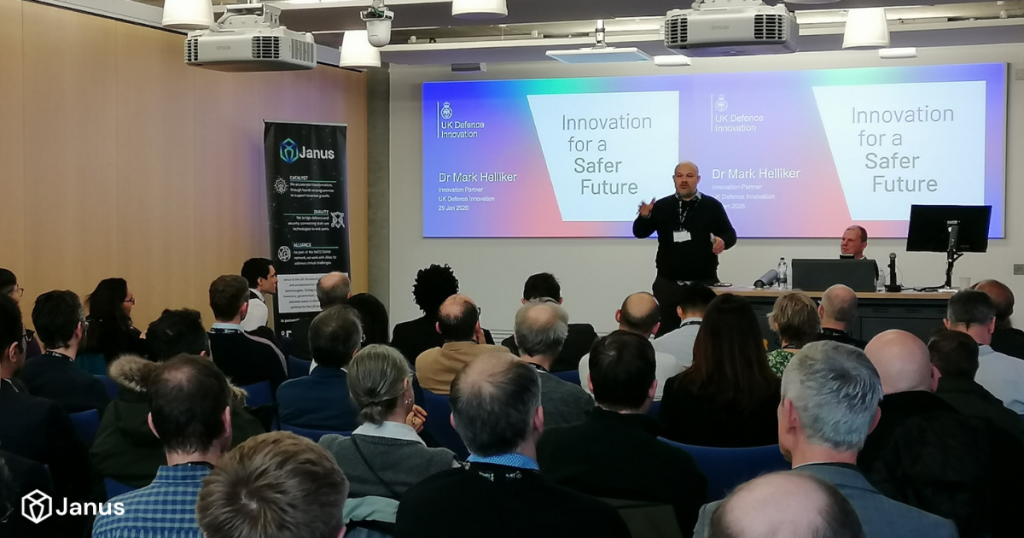
Dual-use forum: future comms, space and autonomous vehicles Pathfinder series 17 February 2026 At the end of January, we hosted our first dual-use forum of 2026, focused on future communications, space technologies and autonomous vehicles. The session brought together innovators, academics, engineers and operators who are working on the technologies that will shape both defence and commercial markets in the coming years. The aim of this forum was to create an open space for people to speak frankly about the opportunities ahead and the barriers that still slow progress. UK Defence Innovation (UKDI) – making defence innovation easier to navigate Dr Mark Helliker from UKDI set the tone by outlining how the defence innovation landscape is shifting. A clear message throughout was the emphasis on speed to market, with a funding model built around 100% milestone-based contracts where innovators retain their IP. Early engagement is now encouraged through short Innovation Outlines, allowing teams to explore fit and shape proposals before investing significant time in full submissions. UKDI also highlighted the role of technical and regional Innovation Partners who help innovators refine their ideas, understand user needs and identify realistic paths to demonstration and procurement. Priority areas continue to include sovereignty and supply-chain resilience, cyber and data, drones and counter-drone capabilities and technologies that address rapidly emerging threats. The overall direction is toward providing clearer front doors, faster support and more coherent routes to adoption. Frequent themes of the event Early engagement really matters A strong theme throughout the room was the importance of engaging early rather than waiting until a project feels “ready”. Speaking with UKDI at outline stage helps innovators test assumptions, understand the real-world need and avoid heading down development paths that don’t align with user demand. Early conversations also help identify where a solution could be demonstrated and which buyers or units may be the most interested. The system is changing but still hard to navigate Participants recognised ongoing efforts to simplify the ecosystem but also pointed to the friction that remains. Procurement timelines are still slow; security requirements can create unexpected hurdles and contract structures often feel better suited to large primes than SMEs or university teams. While things are improving – through clearer challenges, expanded regional support and more consistent processes – innovators still need help mapping routes from concept to an actual purchase. Commercialisation is still the toughest stage The UK has no shortage of strong early-stage research, but many projects struggle in the transition between prototype and first customer. Defence timelines can be longer than investors expect and SMEs often face a cliff-edge between interest and adoption. IP concerns and supply-chain dynamics add complexity, and without a clear buyer, promising technologies can stall. There is growing recognition that bridging this gap – the “first customer” moment – is key to unlocking more innovation. Technology priorities are shifting fast Across discussions, several technical needs surfaced repeatedly. These included navigation systems that don’t rely on GNSS, on-board AI to allow autonomous platforms to complete missions without continuous operator input and growing demand for post-quantum resilience. Cost realism also came through strongly: technologies must match the price point and attrition rate of the platforms they sit on. For example, high-cost subsystems simply won’t be adopted on low-cost airframes. Fast-turnaround materials and manufacturing approaches were also highlighted as essential to accelerating iteration cycles. Smaller teams are doing much of the innovation Many of the most interesting solutions are coming from SMEs and spinouts building compact, adaptable technologies that challenge legacy approaches. These teams are quick to innovate but can struggle with later-stage hurdles such as security integration, export considerations and navigating the supply chain. Helping them connect earlier with end users and understand the requirements around data, security and operational fit is becoming increasingly important. Thank you to our partners and speakers We’re grateful to the University of Surrey for partnering with us on this dual-use forum, our speakers Dr Mark Helliker, UKDI’s innovation partner for the Southeast, and Michael Kohn, University of Surrey and Research Park’s innovation advisor, and our roundtable facilitator Alan Scrase, SETsquared Partnership’s defence expert. A big thank you as well to everyone who contributed to the conversations throughout the day. Share on social media LinkedIn Email WhatsApp Read more Identifying funding fit and R&D applications NATO DIANA debuts second dual-use cohort to UK ecosystem at London launch event Workbench to warfighter: building tech that matters
Identifying funding fit and R&D applications
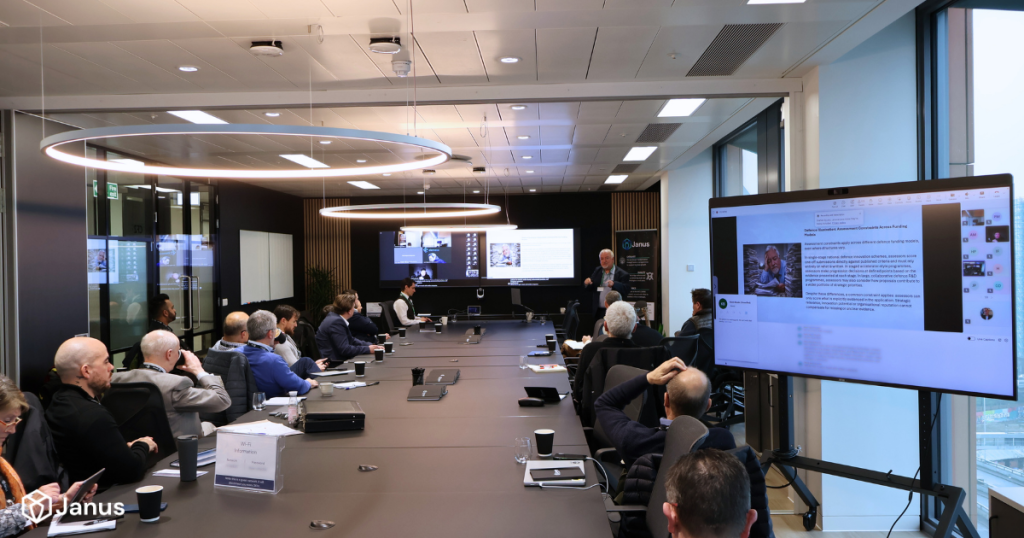
Identifying funding fit and drafting strong R&D applications Pathfinder series 11 February 2026 The first pathfinder event of 2026 brought together more than 250 attendees operating across the defence and dual use ecosystem. Led by Kevin Brooks, the session examined the realities of public R&D funding and the judgement required to navigate it with confidence. The conversation focused not on individual competitions but on the system that shapes them and the capabilities that organisations need to operate effectively within that system. Public R&D funding is often discussed through the lens of opportunity. This workshop reframed it through the lens of intent. Funding programmes are created to address capability needs, influence innovation behaviour and manage long horizon risk. They are instruments of strategic policy and their structure reflects this purpose. Understanding that reality is the starting point for credible engagement. Interpreting funding through strategic intent Throughout the session Kevin emphasised that funding programmes are designed to achieve specific outcomes. Early-stage initiatives support exploration and evidence generation. Mid stage programmes are structured to reduce uncertainty and refine solutions. Later stage opportunities expect maturity, performance data and realistic paths to adoption. These patterns repeat across defence, dual use and broader mission driven schemes. Recognising them allows organisations to interpret calls through the intentions that sit behind them. Strong performers develop judgement not by memorising programme details but by understanding why schemes are structured in certain ways and how those structures signal expectations. Understanding scheme design and variability Attendees were taken through the different types of funding schemes that operate across defence, dual use and civil contexts. The workshop emphasised that schemes vary deliberately in purpose, scale and expectations. Early-stage programmes support exploration and feasibility. Mid-stage schemes focus on refinement, testing and reduction of uncertainty. Later stage programmes expect clearer evidence and the ability to demonstrate performance in relevant environments. Recognising these distinctions is essential when judging which opportunities are appropriate for a given technology or organisational position. The Importance of Assessing Funding Fit Kevin highlighted that a sizeable proportion of unsuccessful applications fail not because of weak ideas but because the opportunity itself is misaligned. Participants were encouraged to begin with a structured review of scheme intent, organisational capability, technology readiness and resourcing. This initial assessment forms the basis of an evidence led bid or no bid decision. The session presented frameworks for interpreting competition documentation, identifying explicit and implicit requirements and assessing whether proposed work can be delivered credibly within given constraints. How Applications Are Assessed in Practice Kevin then provided a clear overview of how applications are reviewed within public funding systems. Assessors score directly against published criteria and must work within defined procedural constraints. They are not permitted to infer intent or fill gaps where evidence is missing. As a result, the strength of an application is determined by the clarity and relevance of what is written rather than the potential of what was intended. Understanding this process helps applicants design responses that can be scored consistently and fairly. Principles of Effective Drafting The workshop concluded with a set of drafting principles that support stronger application development. Kevin outlined several recurring characteristics of well constructed submissions: Clear alignment with assessment criteria A problem or need that is defined precisely and supported by evidence Accurate representation of technology readiness and uncertainty A structured workplan that sets out activities, milestones and responsibilities A team whose capability is relevant and proportionate to the work proposed These principles allow organisations to present information in a way that supports transparent scoring and gives assessors confidence in both approach and delivery. Closing Reflections The session closed by reinforcing the idea that effective engagement with public R&D funding is a capability that develops over time. It requires structured decision making, disciplined interpretation of documentation and clear alignment between proposed work and scheme intent. By applying these principles consistently organisations can improve their likelihood of success and strengthen their overall approach to innovation funding. We extend our thanks to Kevin Brooks for leading the session and for providing a clear and authoritative exploration of a complex topic. His contribution to the workshop was central to its clarity and effectiveness. Download the presentation Share on social media LinkedIn Email WhatsApp Read more Identifying funding fit and R&D applications NATO DIANA debuts second dual-use cohort to UK ecosystem at London launch event Workbench to warfighter: building tech that matters
Workbench to warfighter: building tech that matters

Workbench to warfighters – building tech that matters Pathfinder series 12 January 2026 Innovation alone doesn’t win wars but the deployment of those innovations do. That was the hard-earned truth shared by Chris Manuel, former US Army Special Forces operator, aerospace VP and founder of defence tech ventures including ROVER, Simple Key Loader (SKL) and Tactinet. In a candid conversation hosted by Tanya Suárez, Chris unpacked what it really takes for startups to cross the last mile of innovation – moving from promising prototypes to battlefield-proven systems. Chris’s unique perspective comes from decades of operational experience combined with entrepreneurial grit. His mantra is simple: “Common sense and battlefield realities often trump specifications.” Startups often design for perfection in the lab, but in defence, success means overlaying technology onto operational concepts, solving real problems under real conditions, not just in theory. He illustrated this through three powerful case studies. The first was Remotely Operated Video Enhanced Receiver (ROVER), born from a critical need in Afghanistan and Iraq where troops were flying blind into surveillance missions. Commanders needed real-time visuals from 100 miles away, but the official programme was 15 years out. Chris’s team built a Minimum Viable Product (MVP) with millisecond latency and proved it in the field. This taught him the massive value of using animations and demos to help leaders visualise unfamiliar tech, and ship a threshold capability early, even if it’s clunky, to get feedback from warfighters fast and with accuracy. The second example is the Simple Key Loader (SKL), which evolved from a small team of “13 people in a loft” into a full Program of Record (PoR) delivering over a million devices. A PoR represents a major acquisition initiative that is officially approved, funded and included in the Future Years Defence Program (FYDP). It signals a long-term, stable commitment to develop, procure, or sustain a specific system. For defence contractors, achieving PoR status means predictable, recurring revenue and a structured role within national defence programs. This transition required a shift in mindset, emphasizing reliability, repeatability and leveraging off-the-shelf components wherever possible. Industrialization may lack glamour, but it is critical for credibility and profitability. Finally, there was Tactinet, a PDA-sized (palm-sized device) tactical network that initially failed. Early adopters wanted to kill it. Chris took engineers to Iraq, went on patrol and fixed code in the field. This quick thinking and innovation led to a $150M contract and a converted critic who became a champion. The major lesson here is clear: walk the walk – meaning get engineers and operators in the same environment to work together on solving the problem quicker and more efficiently. Adapting your culture with engineers and owning your core strategy Beyond technology, Chris emphasised culture. Silicon Valley norms don’t translate to the battlefield. You don’t always need engineers in the line of fire, but you need a culture that listens to ground truth, not just documents. You need to stand behind your product – anywhere it goes. On strategy, his advice for founders is to own the “secret sauce.” Fund your core IP yourself to retain ownership, use government money for integration rather than invention, and position yourself as a systems integrator to add value without giving away your crown jewels. When working with primes, don’t fear them but leverage their scale while protecting your IP. Demonstrate capability without exposing schematics and let them handle bureaucracy while you deliver innovation. Perfection is the enemy of deployment Innovators need to remember, that good enough beats perfect, a 70% solution today saves lives. And think like a prime: focus relentlessly on end-user capability. Chris closed with a challenge: build a threshold capability. It doesn’t need to be perfect – just tangible enough for a warfighter to say, “I can use this.” From there, iteration becomes collaboration. Looking ahead, he sees AI and cyber as the next frontiers for integration – domains where speed to deploy will again be decisive. Share on social media LinkedIn Email WhatsApp Read more Pathfinder series: Workbench to warfighter – building tech that matters Janus welcomes NATO DIANA 2026 Programme innovators Anita Friend: Bolstering innovation into defence