Janus Strategic Edge Summit
Expediting innovation and readiness into defence
21 July 2025
Welcoming a new era for dual-use technology
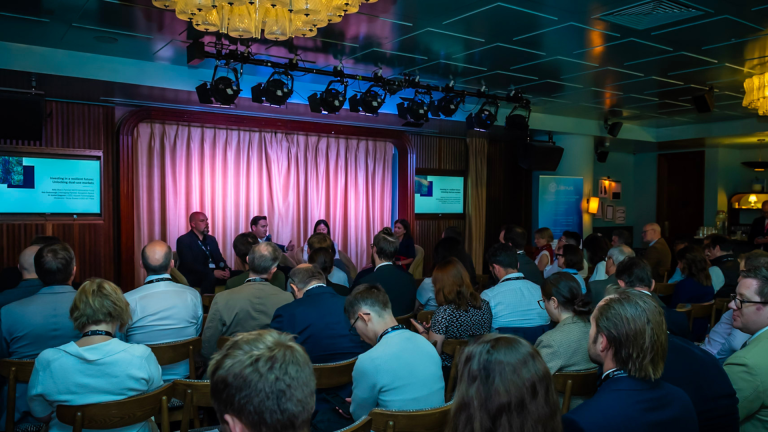
The Janus summit brought together visionary leaders, pioneering startups and strategic investors to explore how emerging technologies are transforming security, resilience and global collaboration. The day was divided into two powerful sessions, each spotlighting innovation at the heart of defence and dual-use technology.

Unlocking European dual-use markets
95% of Defence, Security & Resilience (DSR) investment goes to deep tech, and one-third of global deep tech is defence-related.
In the morning, speakers including Yoram Wijngaarde (Dealroom.co) and Tom Dallas McSorley (NATO DIANA) unpacked Europe’s role in dual-use innovation. Yoram highlighted that DSR investment now makes up 6% of total European venture capital activity, having tripled over the past decade. While Series B and C rounds dominate, the pre-seed stage remains underfunded reflecting a broader trend across deep tech. Notably, one in five deep tech investments now targets DSR innovation, as more VCs launch dedicated defence funds and the number of exits begins to rise.
Although still a young ecosystem, defence is now among the fastest growing VC sectors, with the UK leading since 2019, particularly through hubs like Oxford and Cambridge. More recently, Munich has taken the lead globally. Europe already excels in areas such as quantum computing and quantum cryptography but remains reliant on foreign suppliers for key defence technologies. As emphasised in the discussion, there’s an urgent need for Europe to strengthen its bargaining power in the global tech ecosystem.
How can we unlock the potential of dual-use markets in Europe?
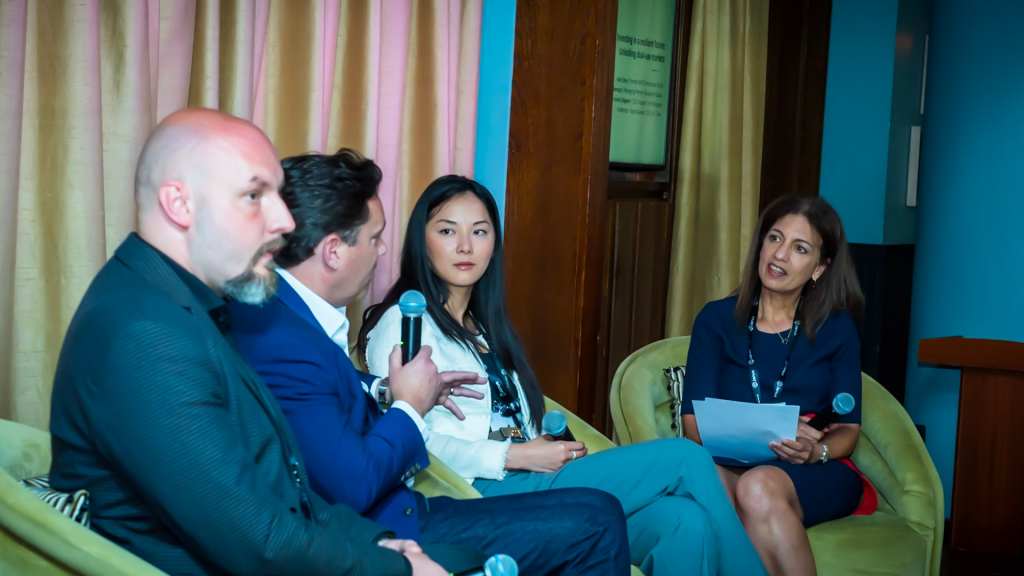
Tanya Suarez Ph.D. (IoT Tribe) called for cross-sector collaboration and hosted a panel with Kelly Chen (NATO Innovation Fund), Rob Desborough (Seraphim Space), and Andrei Dragomir (Aquark Technologies).
The panel explored the evolving perception of Defence Tech. As one speaker noted, “defence used to be a dirty word, but now it depends on how one defines defence” with many recognising national securities, not just battlefield systems, as the core mission. In that sense, defence now overlaps with ESG, where the “S” increasingly stands for security.
“Does it matter where the money comes from?”
The consensus was clear, funding must come from trusted sources, but beyond that, the focus should be on shared strategic goals. However, challenges remain: many VCs still cannot back weaponry due to LP constraints, highlighting the need to bring clarity to this grey zone.
The discussion closed with a powerful reminder: much of the innovation underpinning modern society was forged in war zones. Defence Tech has always been born of necessity and it continues to shape the technologies we rely on every day.



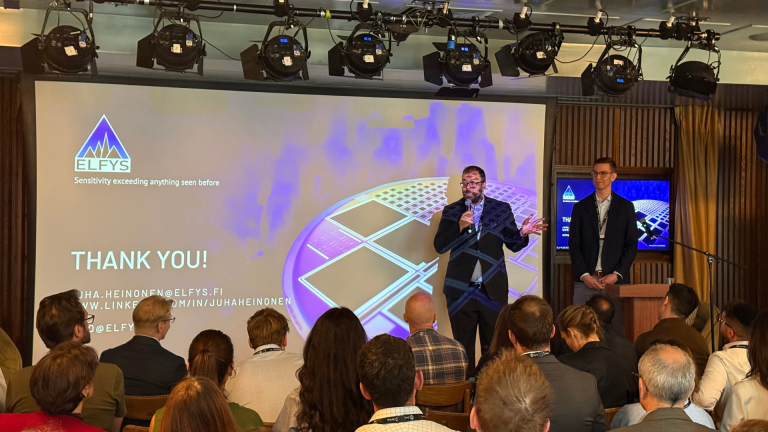
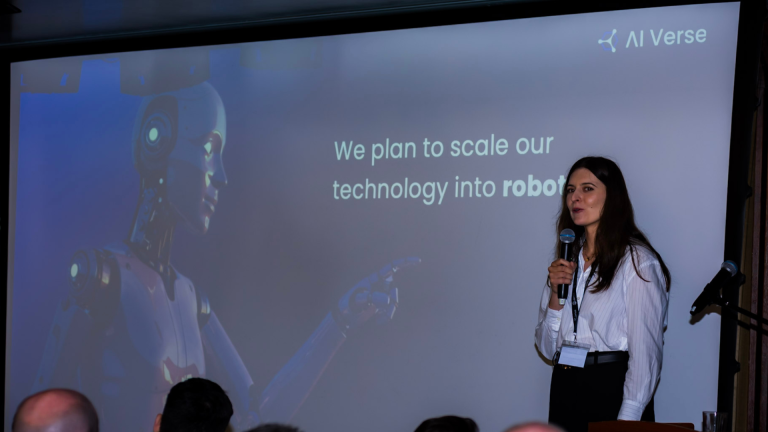
The NATO DIANA innovators showcase featured five standout startups with solutions in sensing and surveillance:
- AI Verse – scalable procedural AI model training. They have delivered a major advancement integrating Geographic Information Systems (GIS). This new feature enables their procedural engine to extract all relevant environmental data based on a specified GPS coordinate and reconstruct it on a 3D scene.
- ElFys – next-gen silicon-sensitive sensors. They developed a new product during the course of the accelerator program and is testing its technology with NATO DIANA.
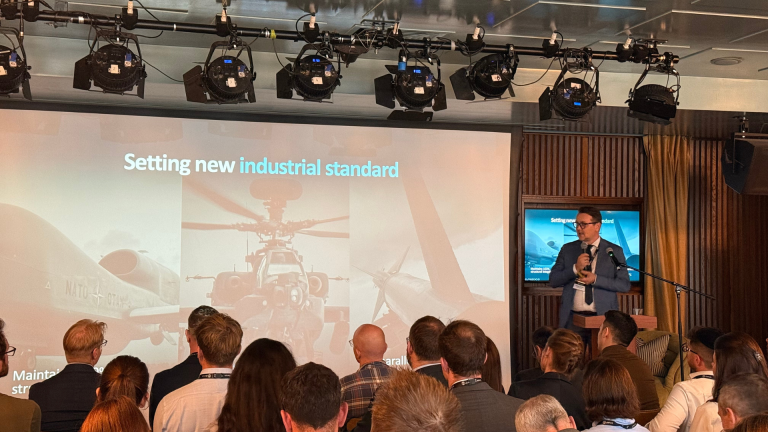
- RVmagnetics – is setting a new industrial standard by creating the world’s smallest passive sensor. They are in discussions with multiple Fortune 500 companies, including a $10 billion automotive client.
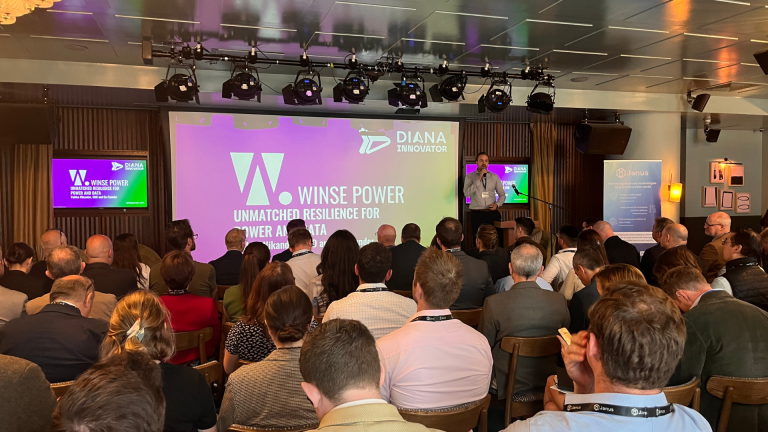
- Winse Power Ltd. – optical data and power transmission. They are working with Saab and with UK and Nordic defence primes.
- Metahelios Ltd – novel imaging using Pixel Metasurface-integrated Technologies (PMiT). They out to replace archaic camera technology that is holding us back on the battlefield with a solution that is 40x smaller, 300x faster, 50x lighter and uses 60x less power

Showcasing UK defence capabilities
With the UK’s Strategic Defence Review (SDR) freshly released, the afternoon shifted focus to national priorities and domestic capability building. The SDR outlines a major financial and strategic commitment 2.5% of GDP on defence by 2027, rising to no less than 3% by 2034 positioning defence as a cornerstone of industrial growth and national resilience.
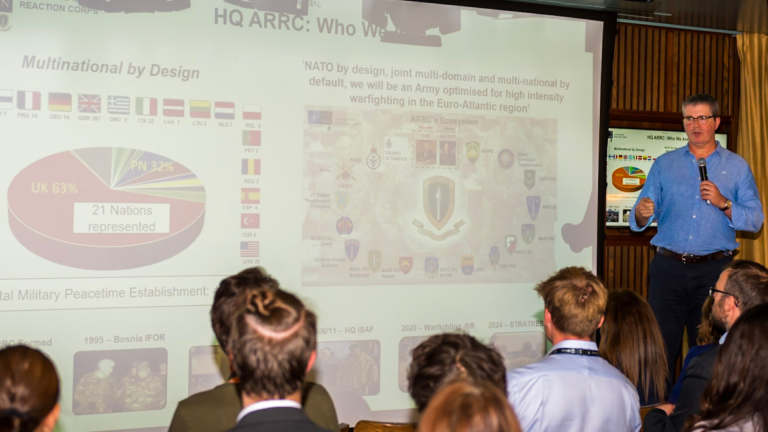
Anthony McGee (RAPSTONE) and Major General Mike Keating (NATO Allied Rapid Reaction Corps) set the tone with a call for technologies that are survivable, attractable, and consumable, engineered not just for innovation’s sake, but for deployment in contested, high-pressure environments.
Task Force RAPSTONE is an innovation and experimentation unit, ensuring the British Army remains agile, tech-enabled and ready to respond to evolving threats with cutting-edge solutions.
The Allied Rapid Reaction Corps (ARRC) is a high-readiness, multinational NATO force headquarters based in Gloucester, UK. It is designed to rapidly deploy and lead combined and joint operations across the full spectrum of military operations – ensuring NATO’s land forces are ready, interoperable and capable of swift response to global security challenges.
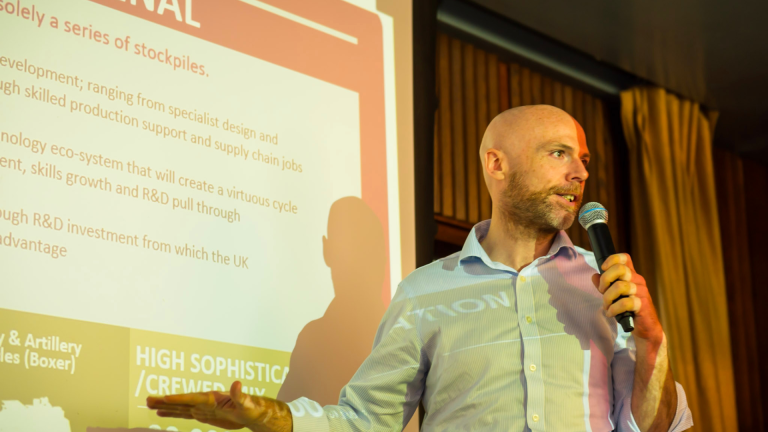
In parallel, there’s a push for a national arsenal—not just stockpiles—and a growing role for disruptive technologies, talent development and military apprenticeships as part of a wider societal shift.
The ARRC is not only a headquarters—it’s a live, evolving platform for NATO’s future warfare readiness, where innovation must translate into real world resilience.
The UK dual-use innovators showcase featured five standout companies tackling critical challenges:
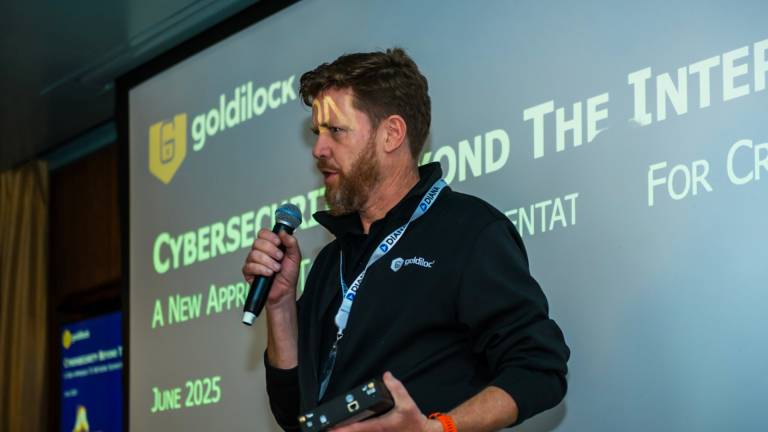
- Goldilock – dynamic, air-gapped cyber defence infrastructure
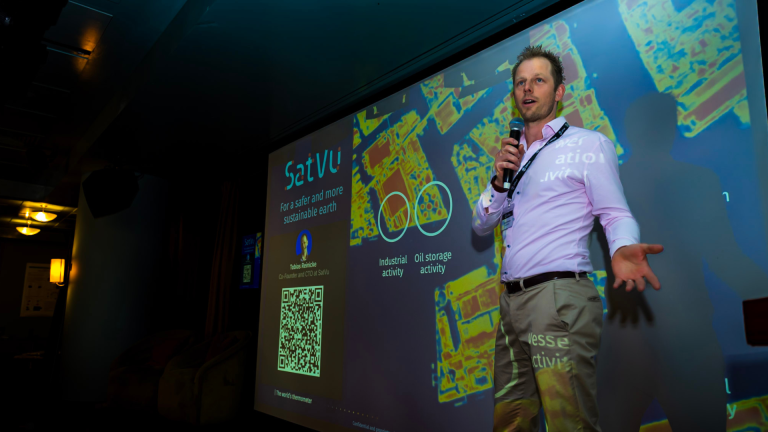
- SatVu – satellite-based thermal imagery for Earth observation
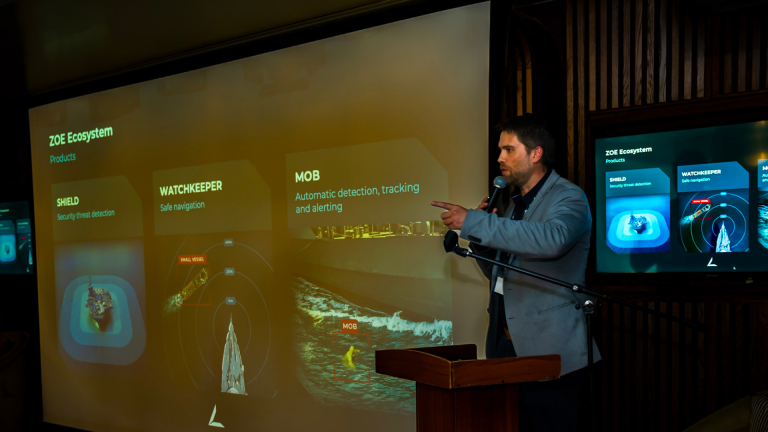
- Zelim – AI-powered maritime rescue and safety systems
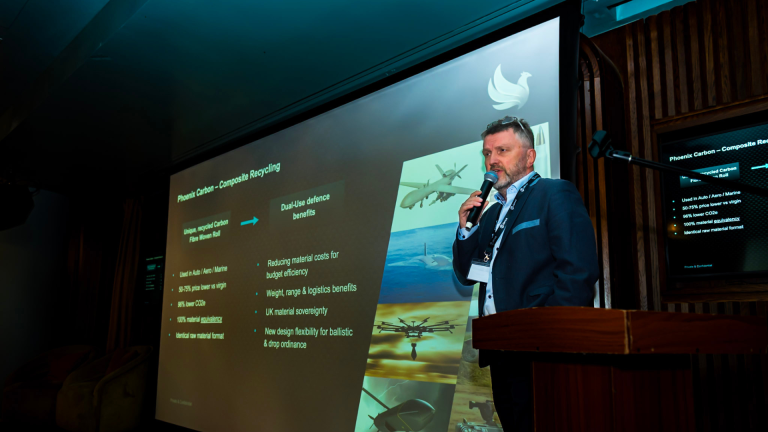
- Phoenix Carbon – sustainable next-gen composite materials
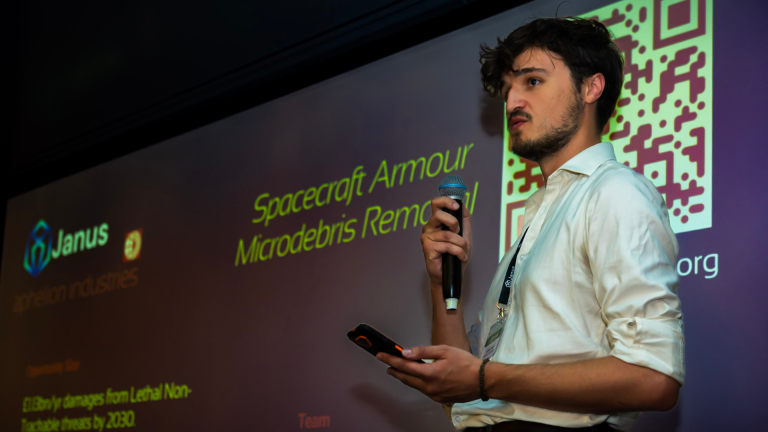
- Aphelion Industries – protecting the orbital environment from debris and contamination
What is needed to accelerate startup access into the UK’s defence and procurement ecosystem?
Sami Moughrabie (Atmos Ventures) spoke with Ben Naylor (Commercial X) and Aimie Stone (ADS Group Ltd) on procurement reform. While progress is being made by embedding innovation earlier in the ideation process, barriers remain, particularly in how innovators connect with the wider industry.
The panel stressed the importance of new approaches to assessing risk, and a mindset shift: early-stage failure must be seen as part of the process, not a reason to reject change. The role of large primes was also discussed while they remain central, the dominance of the current ecosystem may hinder progress unless space is made for new primes.
As the UK moves onto a so-called “war footing”, the panellists called for clear industrial strategy, more effective matchmaking between public and private sectors and better support for scaling and exit pathways particularly for SMEs navigating the valley of death.
Anita Friend (Defence and Security Accelerator) shared insights on how innovation and defence preparedness must go hand in hand. She emphasised that innovation is only innovation when we move an idea to real-world impact, urging the sector to adopt a more focused definition to build trust.
She underlined the urgency of technological adoption, stating that only by harnessing technology will we be quicker and better prepared than our adversaries. To meet this challenge, she called for closer alignment between government and science and a deliberate shift toward solutions with operational relevance.
Victoria Gurtler (Helsing) joined Tanya Suarez in a closing fireside chat, exploring what it means to be primed for possibility in today’s evolving defence landscape. Victoria stressed the need for futurised military acquisition and a software-first approach, noting that AI continues to improve with time and data. While the Strategic Defence Review reflects a shift toward readiness, the UK remains in a pre-war mindset. She highlighted the importance of balancing high and low-tech solutions and praised the 20:40:40 strategy for supporting unmanned and autonomous capabilities.